
xchange NIV Nasal CPAP Shows Favorable Observed Trends in Real-World Comparative Evaluation
xchange vs. LMA: A Prospective Comparative Evaluation Conducted at MemorialCare Surgical Center – Laguna Woods
As anesthesia providers continue to care for increasingly complex patients in ambulatory and procedural settings, maintaining airway patency while supporting efficient workflow remains a daily challenge. A recent prospective comparative evaluation conducted at MemorialCare Surgical Center – Laguna Woods offers encouraging real-world observations on the use of the xchange™ NIV Nasal CPAP compared to traditional laryngeal mask airway (LMA) management.
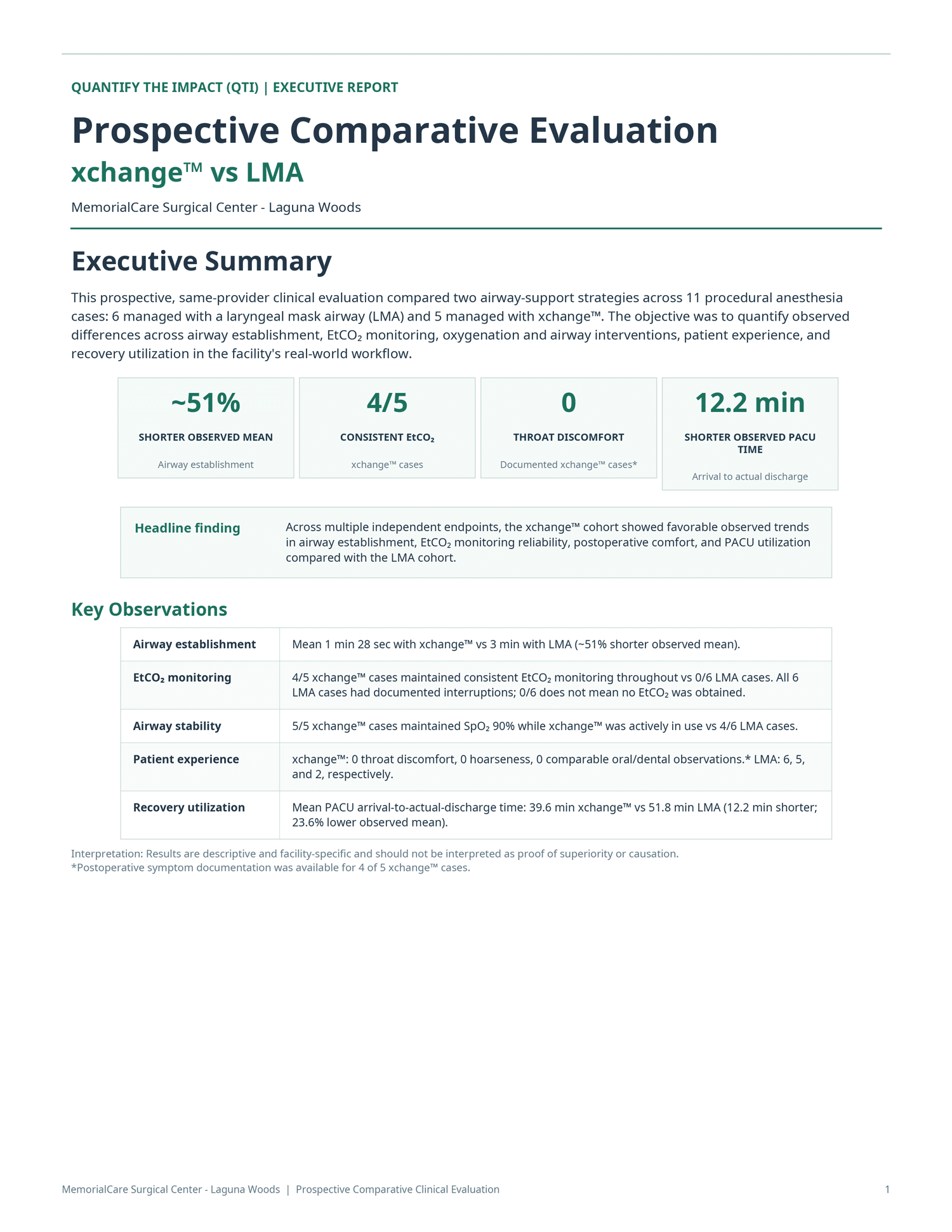
The evaluation included 11 cases performed by the same provider, with six patients managed with an LMA and five with xchange. While the study was not designed to establish causation or superiority, the results demonstrated favorable observed trends for xchange across multiple clinical and operational endpoints.
Notable Findings From The Evaluation
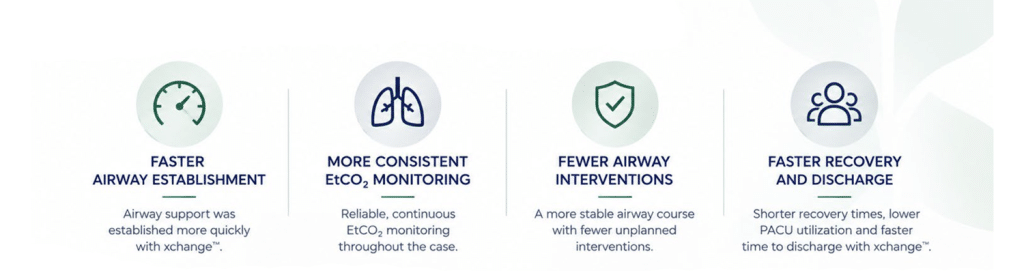
xchange Had ~51% Shorter Airway Establishment Time
One of the most notable findings was airway establishment time. Among cases with valid timestamps, the mean airway establishment time was one minute 28 seconds with xchange compared to three minutes with an LMA, representing approximately a 51% shorter mean time. For anesthesia teams focused on procedural efficiency and OR flow, reducing setup time may help streamline case management while maintaining focus on patient care.
xchange Had Consistent ETCO2 Monitoring in 4/5 Cases
The evaluation also highlighted differences in ventilation monitoring. Consistent capnography remains critical during moderate-to-deep sedation, particularly in patients at increased risk for airway obstruction. In this assessment, four of five xchange cases maintained consistent EtCO₂ monitoring throughout the procedure, while interruptions were documented in all six LMA cases. Investigators noted that these observations may provide greater visibility into ventilation status and earlier recognition of changes that require intervention.
xchange Maintained SpO₂ ≥90% During Active Use in 5/5 Cases
Airway stability findings were equally encouraging. All five patients maintained oxygen saturation at or above 90% while xchange was actively in use, and no intraoperative airway interventions were required during active support. In comparison, two patients in the LMA cohort experienced documented desaturation events that required airway maneuvers or supplemental interventions. Researchers emphasized that these findings represent observed trends within a small cohort and warrant further study.
xchange Had a 12.2-Minute Shorter Observed Mean PACU Time
Patient experience and recovery metrics also favored the xchange group. Among cases with available postoperative documentation, no patients supported with xchange reported throat discomfort or hoarseness. Additionally, the xchange cohort demonstrated a 12.2-minute shorter mean PACU arrival-to-discharge time, representing a 23.6% lower observed mean than the LMA group. For facilities seeking to improve throughput and recovery efficiency, these findings represent an important operational signal worth continued evaluation.
The xchange Approach: Support Airway Patency and Ventilation
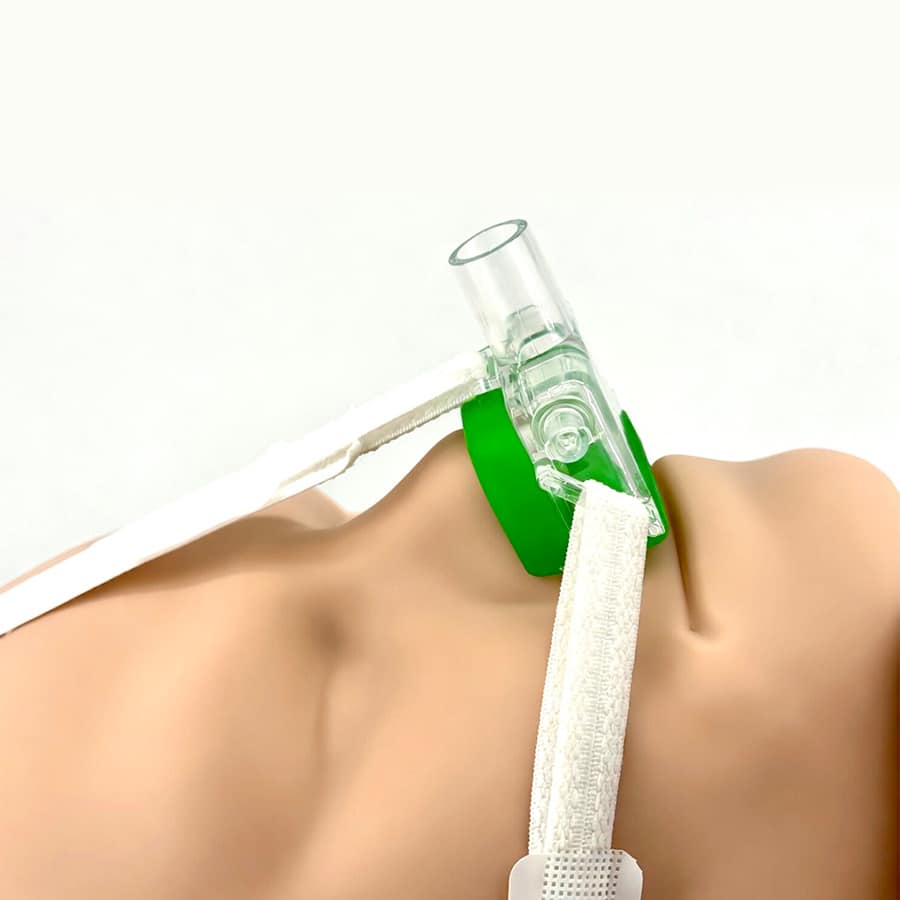
These observations align with the broader clinical philosophy behind xchange. Designed to provide proactive, noninvasive positive airway pressure during moderate-to-deep sedation and selected TIVA procedures, the device supports airway patency and ventilation rather than relying solely on supplemental oxygen. This approach may be particularly valuable in patients with obesity, obstructive sleep apnea, COPD, asthma, and other conditions associated with increased airway risk.
The consistent direction of the findings across airway establishment, ventilation monitoring, oxygenation, patient comfort, and recovery utilization suggests that xchange may offer anesthesia providers a promising noninvasive airway management option within the perioperative continuum.
Click here for the complete Executive Report.
Key Features and Benefits of the xchange NIV Nasal CPAP Include:
- Maintains upper airway patency with noninvasive nasal CPAP support.
- Delivers high inspired oxygen concentrations (FiO₂).
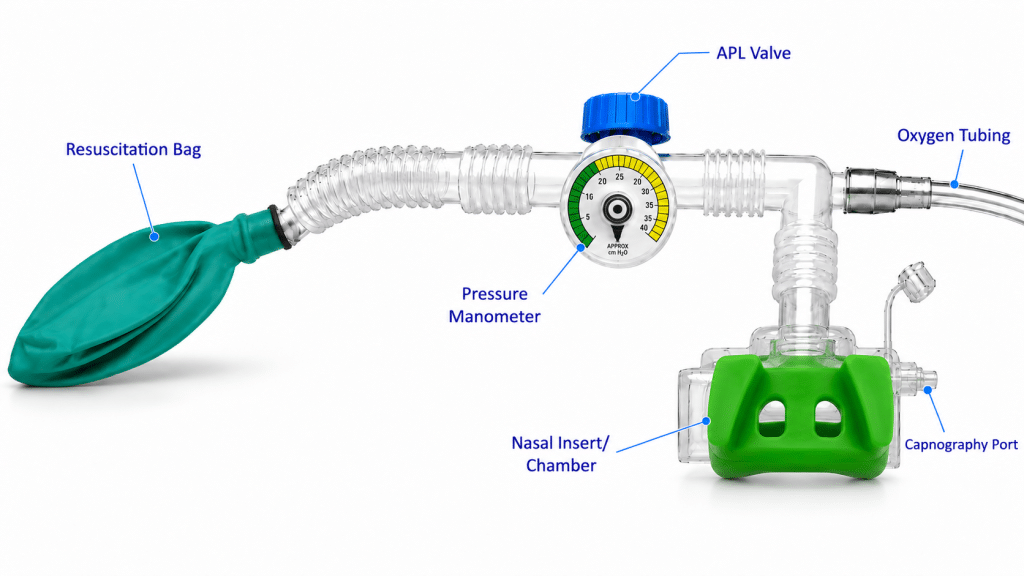
- Supports continuous end-tidal CO₂ (EtCO₂) monitoring.
- Provides adjustable positive airway pressure up to 20 cmH₂O through an integrated APL valve.
- Features an integrated manometer for real-time pressure visualization.
- Utilizes a proprietary nasal interface and air chamber designed to optimize positive-pressure delivery.
- Connects directly to standard wall oxygen with no capital equipment required.
- Includes a single-use, fully inclusive kit compatible with existing anesthesia workflows.
- Designed for use throughout the perioperative continuum, including procedural sedation and selected TIVA cases.
- May help reduce reliance on more invasive airway devices when clinically appropriate.
- Supports patient comfort while promoting workflow efficiency and operational simplicity.
For more information or a demonstration of the xchange NIV nasal CPAP, contact your local MED Alliance Group sales representative, call 888-891-1200 or email us.
MED Alliance Group is dedicated to partnering with medical device companies offering high-quality, innovative products that improve patient care. We are delighted to partner with Pneuma Therapeutics and add the xchange to our anesthesia portfolio.
MED Alliance Group is a medical device distributor that has been dedicated to meeting the needs of our clinical customers and manufacturing partners since 1998. We specialize in the sales, marketing, importation, logistics and distribution of innovative, high-quality and cost-effective products found in anesthesia and respiratory, blood and transfusion therapy, EMS and emergency room, interventional radiology and cath lab, iv and vascular, as well as NICU and PICU.
Please follow us on LinkedIn, Facebook and Twitter for MED Alliance product updates.


