The Clinical And Economic Case for the AERIS Airway™ in Sedation Airway Management
Hypoxemia affects up to 33% of patients undergoing moderate to deep intravenous (I.V.) sedation. Even brief episodes can lead to complications that harm patients, increase operational costs, prolong recovery, and contribute to readmissions.
Current practices during I.V. sedation typically involve the use of oxygen masks or nasal cannulas to deliver oxygen and monitor CO₂ levels. However, both devices often result in inadequate oxygen delivery and provide unreliable end-tidal CO₂ (ETCO₂) readings due to gas mixture and dilution. This situation puts anesthesia providers in a reactive position instead of pro-active one when it comes to detecting respiratory issues and mitigating the risk of hypoxemia.
The AERIS Airway™ Addresses Today’s Challenges
In today’s surgical and procedural environments, anesthesia departments face increasing pressure to improve patient safety, reduce complications, streamline clinician workflow, and manage costs effectively. The AERIS Airway™, a first‑of‑its‑kind oxygen delivery and CO₂ monitoring device designed for use during moderate to deep I.V. sedation, Total Intravenous Anesthesia (TIVA) and post-extubation airway management, addresses these challenges.
What Is the AERIS Airway™?
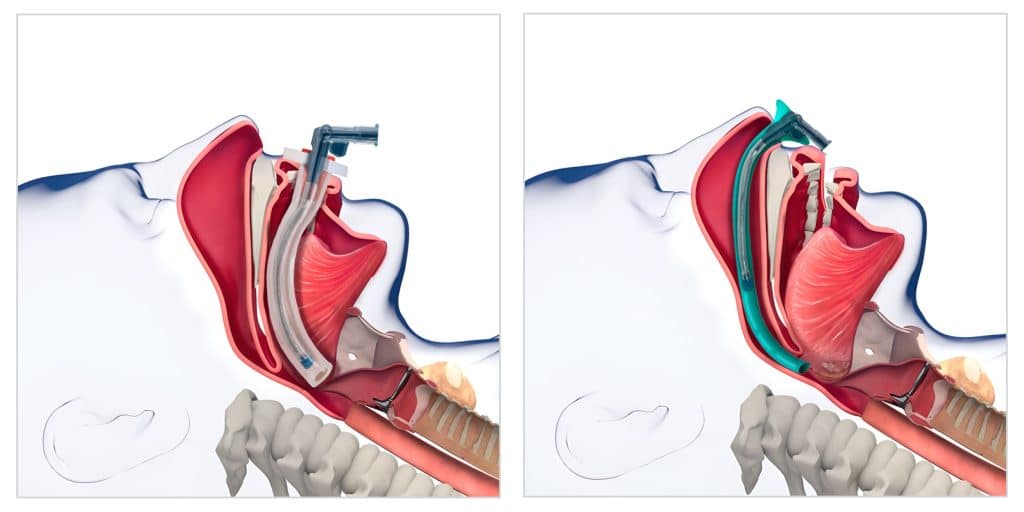
The AERIS Airway modernizes deep sedation practices and limits the risk of hypoxia in patients. It transforms any standard Guedel-type oropharyngeal (OPA) or nasopharyngeal (NPA) into a highly efficient oxygen delivery and ETCO₂ monitoring system in seconds.
By offsetting the oxygen delivery port from the CO₂ detection port, end-tidal CO₂ is captured at the supraglottis with minimal oxygen dilution, generating a real-time, reliable CO₂ waveform on all clinical capnography monitors. The AERIS delivers up to 80–100% FiO₂ at just 2–10 L/min, depending on flow rate. Compatible with 95% of adult OPAs and NPAs, AERIS is a single‑use device that integrates seamlessly into anesthesia workflows and exceeds the American Society of Anesthesiologists (ASA) monitoring guidelines.
AERIS Clinical Benefits That Directly Improve Safety
- Maximized Oxygen Delivery
AERIS delivers 2.4 to 3.3 times higher FiO₂ compared to nasal cannulas or face masks by directing oxygen precisely to the supraglottic region. - Highly Reliable CO₂ Monitoring
By measuring CO₂ near the trachea, AERIS produces a waveform similar to that of closed‑circuit general anesthesia, which is far superior to the readings obtained from nasal and mask capnography. This allows for early detection of respiratory compromise. - Proactive Sedation Management
Accurate CO₂ monitoring enables anesthesia providers to adjust sedative levels confidently, reducing the risk of oversedation and promoting faster patient recovery. - Enhanced Workflow Efficiency
During pre‑, intra‑, and post‑procedure phases, the detachable cannula and integrated tubing facilitate smooth transitions, saving valuable procedural and turnover time.
Economic Benefits: Why AERIS Is a Value‑Driven Solution
- Up to 75% Reduction in Oxygen Consumption
Because AERIS achieves high FiO₂ at low flow rates (2–4 L/min), hospitals and surgery centers dramatically reduce oxygen usage, resulting in direct and recurring operational cost savings. - Lower Rates of Hypoxemia and Adverse Events
Each avoided hypoxemic episode reduces the likelihood of extended PACU stays, additional monitoring, unplanned hospital admissions, and costly interventions. - Reduced Medical‑Legal Exposure
The average malpractice payout for anesthesia cases in the U.S. is $400,000, with hypoxia‑related cases often reaching seven figures. By preventing respiratory compromise and exceeding ASA guidelines, AERIS lowers legal risks substantially. - Increased Workflow Efficiency
The time saved per case, from preoxygenation through PACU handoff, results in higher provider productivity, reduced overtime and staffing burdens, more predictable room turnover and greater overall case throughput. - Competitive Total Cost per Procedure
The AERIS replaces multiple components and eliminates the hidden costs associated with unreliable monitoring and inefficiencies. Compared to makeshift or off‑label device combinations, AERIS offers significantly more value and superior clinical performance.
As healthcare continues to emphasize value‑based care, anesthesia leaders must evaluate technologies that simultaneously elevate patient safety and reduce costs. The AERIS Airway delivers on both fronts by modernizing airway management, preventing complications, optimizing workflow, and lowering system‑wide expenses.
For more information or a demonstration of the AERIS Airway, contact your local MED Alliance Group sales representative, call 888-891-1200 or email us.
MED Alliance Group is a medical device distributor dedicated to meeting the needs of our clinical customers and manufacturing partners since 1998. We specialize in the sales, marketing, importation, logistics and distribution of innovative, high-quality and cost-effective products found in anesthesia and respiratory, blood and transfusion therapy, EMS and emergency room, interventional radiology and cath lab, iv and vascular, as well as NICU and PICU.
Please follow us on LinkedIn, Facebook and Twitter for MED Alliance product updates.


