
Top 10 Frequently Asked Questions About The HORSESHOE™ Airway Security Device
Inquiring Minds Want to Know More About the HORSESHOE™
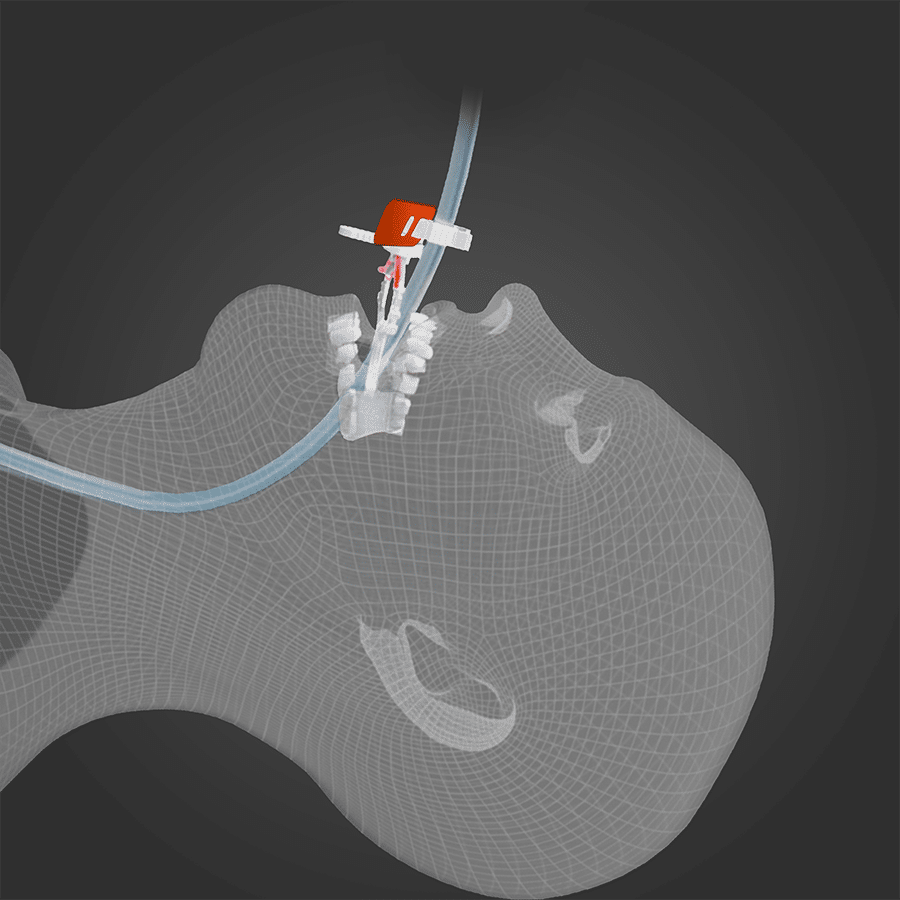
The HORSESHOE™ airway security device is generating significant interest from clinicians. And rightfully so. The HORSESHOE is an innovative medical device designed to help maintain airway security while preventing facial pressure injuries. The only face-free design, the HORSESHOE keeps the endotracheal tube off the lips, eliminates direct contact with vulnerable facial tissues, and alleviates the need for adhesives or tape to maintain tube stability. The HORSESHOE facilitates oral care, simplifies clinician processes and improves consistency across shifts without compromising airway security or patient comfort.
As more clinicians are intrigued, we’ve compiled some of the most common questions and their answers.


Has the HORSESHOE been used on actual patients?
Yes. The HORSESHOE has been utilized on burn patients in the OR at Mass General Hospital and at stabilization points on injured warfighters in Ukraine. All stakeholders rated the ease of use, stability, and effectiveness of the HORSESHOE highly (4.5+ out of 5).

Can I use the HORSESHOE with an LMA?
No. The HORSESHOE is only intended for use with oral ET tubes, sizes 6.5 to 10 mm.

Won’t it make the patient gag?
Not any more than the ET Tube!

Will it cause pressure injuries inside the mouth?
Any device that may come into contact with the tissue must be monitored. The clinical rationale is not that intraoral contact carries zero risk; rather, the oral mucosa and facial skin tolerate injury differently, and the HORSESHOE™ has minimal points of contact on the tongue, which can move freely, reducing the risk of static pressure.
Oral mucosa is more vascular, remains moist, is exposed to frequent mechanical contact, and generally heals faster and with less scarring than skin. Waasdorp et al. concluded that faster wound closure, saliva, a more rapid immune response, and extracellular matrix remodeling all contribute to superior oral mucosal healing compared with skin.
Also, the Molar Props™ are 37% softer than dentures, and they are designed to “flare away” from the gum line.

How often do you need to replace the HORSESHOE?
The HORSESHOE is intended to stay in place for the duration of mechanical ventilation or one month—whichever comes first. If a tube change is necessary, we recommend using a new HORSESHOE with the replacement ET tube. Always change the supplementary strap when it becomes visibly soiled.

Can I use the HORSESHOE on my pediatric patients?
It depends on the patient and the size of their jaw. Most children have 90% of their facial bone growth complete by age 12-13, which means ages 12-13 and up are candidates for the HORSESHOE, as it will fit 90% of adult jaws. The main determinants of fit are jaw and mouth opening size and the patient’s ability to use a 6.5-10 mm ET tube.

Can the HORSESHOE be used in patients with broken facial bones?
The HORSESHOE may be useful in many facial-trauma patients because it does not rely on facial skin, lips, adhesives, or cheek pressure for securement; however, it should not be used when the mandible or maxilla is fractured, unstable, recently injured, or not yet cleared. In those cases, airway securement should follow trauma/maxillofacial guidance, imaging, and the treating team’s best clinical judgment.

Do I still need to rotate my ET tube when using the HORSESHOE?
In many patients who use the HORSESHOE™, the lips do not come into contact with the tube at all. However, that does not remove the need for routine ET-tube repositioning if your facility (or your patient) requires it. The HORSESHOE allows the ET tube to be repositioned much more easily along its continuous gliding track while maintaining securement, rather than relying on tape changes or facial adhesive devices.

Will using the HORSESHOE cause injury to the TMJ?
If a patient develops TMJ pain, the first thing to remember is that intubation itself is already a known TMJ stressor. Many current ET tube securement approaches use built-in anterior (incisor plane) bite blocks, or Guedel/oropharyngeal airways used as bite blocks, which concentrate force at the incisors and anterior mandible, increasing leverage across the TMJ. Anesthesia trauma literature specifically recommends placing bite blocks between the molars rather than the incisors and warns against using oropharyngeal airways as bite blocks. The HORSESHOE’s posterior molar-region support more closely follows physiologic bite loading and is intended to reduce unnecessary anterior/TMJ stress without claiming to eliminate TMJ risk.

If the HORSESHOE stays in place using jaw biomechanics, why does it come with a
strap?
The HORSESHOE™ uses posterior jaw biomechanics as its primary design rationale, but real ICU patients are not static; in fact, they can (and do) attempt self-extubation. Or, they may have missing molars, unstable dentition, heavy secretions, agitation, coughing, lightened sedation, proning, transport, or frequent repositioning. The strap provides clinicians with an additional layer of stabilization in higher-risk situations, without altering the core concept that the device is intended to seat posteriorly rather than rely on facial adhesives or anterior bite-block pressure. Also, many protocols still dictate the use of a strap.
For more information or an evaluation of the HORSESHOE airway security device, contact your local MED Alliance Group sales representative, call 888-891-1200 or email us.
MED Alliance Group is a medical device distributor that has been dedicated to meeting the needs of our clinical customers and manufacturing partners since 1998. We specialize in the sales, marketing, importation, logistics and distribution of innovative, high-quality and cost-effective products found in anesthesia and respiratory, blood and transfusion therapy, EMS and emergency room, interventional radiology and cath lab, iv and vascular, as well as NICU and PICU.
Please follow us on LinkedIn, Facebook and Twitter for MED Alliance product updates.


